Featured
Table of Contents
- – The Issue with Conventional Weekly Treatment
- – What Makes EMDR Intensives Different
- – The Integrative Approach: Why Numerous Techniq...
- – That Profits Most from EMDR Intensives
- – What Actually Occurs in an Intensive
- – The Science Behind Accelerated Handling
- – Integration After the Extensive
- – Key Phrases and Browse Terms
- – Deciding
You've been in treatment for months-- possibly years. You comprehend your trauma intellectually, you have actually discovered dealing abilities, however the weight hasn't raised. Sets off still hijack your nerves. Relationships stay tough. The past keeps invading the present regardless of your ideal efforts to "process" it once a week for 50 mins.
This is where EMDR extensive treatment essentially changes the equation.
The Issue with Conventional Weekly Treatment
Weekly sessions help some problems, yet injury doesn't adhere to a convenient 50-minute schedule. When you're handling complicated PTSD, add-on wounds, or deeply embedded stressful memories, the stop-start nature of traditional therapy can really slow down recovery.
You spend the first 15 minutes reconnecting with your therapist and obtaining back into prone space. You process for possibly 20 minutes. Then you have to conclude, placed every little thing back in its box, and go back to routine life-- frequently still triggered, without time for complete processing.
By the time next week shows up, your nerve system has altered to standard. You're beginning again, developing energy once more, just to stop after much less than an hour. For intricate injury, this technique can take years with step-by-step development.
What Makes EMDR Intensives Different
EMDR intensive therapy at Pittsburgh Facility for Integrative Treatment condenses what might take months right into focused, successive days of therapy. Instead of 50-minute once a week sessions, you participate in 3-4 hour sessions daily over a period varying from half a day to five days.
This prolonged format enables your brain to remain in handling mode. You're not frequently quiting and restarting-- you're keeping restorative energy. The bilateral excitement that makes EMDR effective proceeds across sustained periods, enabling deeper reprocessing of traumatic product.
Customers constantly report breakthroughs in intensive formats that thwarted them in conventional treatment. The immersive nature eliminates you from everyday disturbances and responsibilities, producing dedicated area for recovery work. You're not rushing from treatment to a job conference or getting children from school while still psychologically turned on.
The Integrative Approach: Why Numerous Techniques Matter
What identifies Pittsburgh Facility for Integrative Therapy from typical EMDR companies is the innovative combination of corresponding techniques. Injury impacts mind, body, and relational patterns-- recovery needs resolving all three.
Inner Household Equipment (IFS) recognizes that various components of your mind hold various elements of injury. One component may prepare to process while one more really feels protective or immune. IFS job during intensives aids work with these interior components, decreasing inner dispute that often delays traditional therapy.
Sensorimotor Psychiatric therapy brings body-based awareness into trauma processing. Trauma stays in the nerve system and body, not simply cognitive memory. Somatic treatments aid release stuck survival power-- the fight, trip, or freeze reactions that never ever finished. In between EMDR processing rounds, activity and body-based grounding ensures you're not simply emotionally processing but literally releasing held stress.
Mentally Concentrated Treatment (EFT) concepts notify just how attachment wounds are attended to. Lots of injury patterns come from early relational experiences. EFT-informed extensive job assists reprocess these attachment injuries, producing new inner models of safety and connection.
Cognitive Handling Treatment (CPT) elements deal with the stuck beliefs that trauma develops. "I'm not safe," "I can not rely on any person," "It was my fault"-- these cognitive distortions require direct focus. CPT techniques integrated into intensives target these beliefs methodically.
Safe Method (SSP) utilizes auditory excitement to regulate the worried system through the vagus nerve. This develops physical safety that supports deeper trauma processing. When your nerves really feels secure at an organic level, you can access and process memories that would or else stay defended.
That Profits Most from EMDR Intensives
Intensive EMDR treatment specifically helps people with single-incident injury (accidents, attacks, all-natural disasters) seeking fast resolution, facility PTSD from long term or multiple traumas, add-on trauma impacting grown-up connections, dissociative signs that piece experience, treatment-resistant injury where conventional therapy hasn't worked, and hectic professionals who can dedicate extensive time but deal with ongoing weekly dedication.
The layout also fits people that've "hit a wall surface" in conventional treatment-- where understanding is there yet emotional alleviation remains evasive. The continual handling of intensives often breaks via these therapeutic plateaus.
What Actually Occurs in an Intensive
EMDR intensives aren't simply longer treatment sessions-- they're thoroughly structured experiences. Each day generally includes prep work and grounding to ensure anxious system readiness, expanded EMDR processing sessions targeting certain memories, somatic combination making use of movement and breathwork, IFS work to resolve safety components, and abilities developing for psychological guideline and distress resistance.
Between processing rounds, you engage in grounding tasks that help incorporate what's changing. This may include walking, gentle motion, breathing workouts, or connecting with encouraging sources. The intensive layout allows time for your system to clear up after extreme processing-- something difficult in 50-minute sessions where you leave still activated.
Pittsburgh Facility for Integrative Treatment tailors each extensive to individual demands. Some customers gain from half-day layouts, others need multiple consecutive days. The structure adjusts based on injury complexity, nerves ability, and therapy goals established during initial assessment.
The Science Behind Accelerated Handling
Study continually shows EMDR's efficiency for injury, with intensive formats showing even stronger end results. The bilateral stimulation made use of in EMDR-- eye movements, touching, or acoustic tones-- activates the mind's all-natural details handling system.
When injury takes place, memories can obtain embeded implied memory networks, continuing to be unprocessed and activating present-day reactions. EMDR assists relocate these memories right into explicit memory where they're contextualized as "past" as opposed to "present hazard."
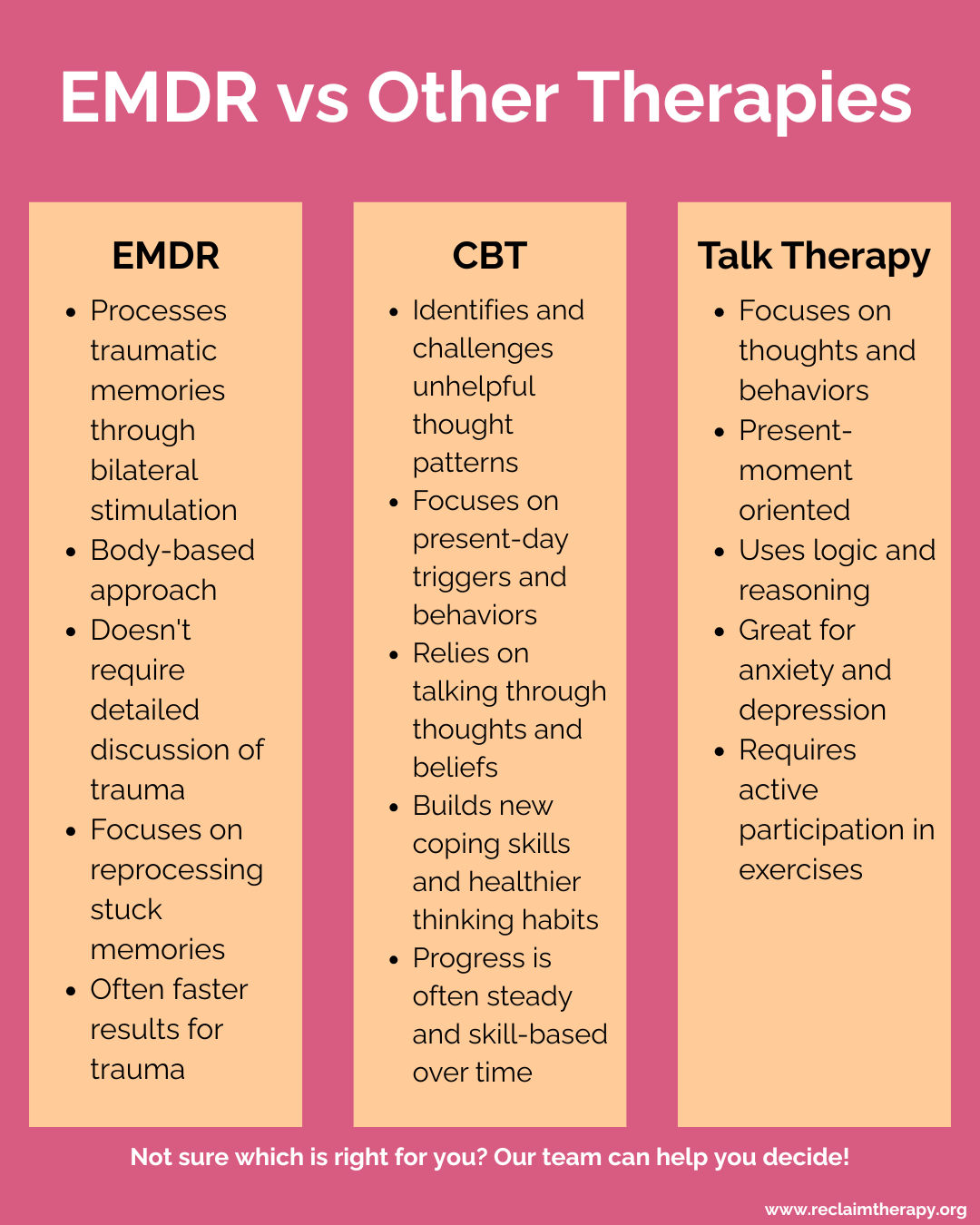
The intensive format amplifies this by preserving reciprocal stimulation throughout prolonged periods, enabling even more full handling of distressing memory networks. Researches show extensive EMDR generates substantial sign decrease in much shorter durations compared to once a week sessions-- typically accomplishing in days what takes months in typical layouts.
Integration After the Extensive
The work does not finish when the extensive wraps up. Pittsburgh Center for Integrative Treatment offers assimilation assistance to aid maintain gains. This may consist of follow-up sessions to refine additional material that appeared, abilities coaching for managing life post-intensive, somatic methods to preserve nerve system policy, and link to ongoing support resources.
Many clients continue with much less regular upkeep sessions after intensives, utilizing once a week treatment for integration rather than energetic injury handling. This produces an extra sustainable lasting approach where the intensive handles the heavy training and recurring sessions sustain continued growth.
Key Phrases and Browse Terms
Appropriate terms include EMDR extensive treatment, trauma extensive hideaway, sped up EMDR treatment, facility PTSD extensive, EMDR resort Pennsylvania, integrative injury treatment, somatic EMDR therapy, IFS and EMDR integrated, trauma therapy intensive, EMDR marathon sessions, quick trauma resolution, attachment injury extensive, and dissociation therapy extensive.
Deciding
EMDR intensives need dedication-- financial, temporal, and emotional. They're not ideal for everyone or every circumstance. Energetic crisis, serious dissociation without appropriate stablizing, or lack of external support systems might indicate the requirement for preparatory work first.
Nevertheless, for individuals that have actually struggled with conventional treatment pacing, who have certain trauma targets for resolution, or who require accelerated treatment because of life conditions, intensives offer a powerful alternative.
Pittsburgh Facility for Integrative Treatment's team brings over three decades incorporated experience, EMDRIA qualification and training, and expertise in complicated trauma and dissociation. The integrative strategy integrating EMDR, IFS, somatics, and other evidence-based methods addresses injury's complete influence-- cognitive, psychological, physical, and relational.
If you have actually been servicing injury for months or years without the relief you require, if you comprehend your past but still really feel caught by it, or if your routine makes weekly treatment unsustainable, intensive EMDR treatment may be the increased course to recovery you have actually been seeking.

Table of Contents
- – The Issue with Conventional Weekly Treatment
- – What Makes EMDR Intensives Different
- – The Integrative Approach: Why Numerous Techniq...
- – That Profits Most from EMDR Intensives
- – What Actually Occurs in an Intensive
- – The Science Behind Accelerated Handling
- – Integration After the Extensive
- – Key Phrases and Browse Terms
- – Deciding
Latest Posts
Why Months of Standard Therapy Had Not Been Working: How EMDR Intensives Changed Everything
Discovering the Right Assistance: A Detailed Check Out Anxiousness & & OCD Therapy Choices
Comprehensive Mental Healthcare: A Deep Study Modern Treatment Solutions
More
Latest Posts
Why Months of Standard Therapy Had Not Been Working: How EMDR Intensives Changed Everything
Discovering the Right Assistance: A Detailed Check Out Anxiousness & & OCD Therapy Choices
Comprehensive Mental Healthcare: A Deep Study Modern Treatment Solutions